AC Repair Vs. Replacement: 6 Key Factors To Help You Decide
Image source
If your HVAC system is not working as it should, you might be unsure whether to repair or replace it. Even if you are not there yet, it's better to be ready because it's a tough point that every homeowner finds themselves in at some point.
Obviously, maintenance seems to be the best option, but if you have done some tune-ups and nothing seems to be improving, maybe it's time to get a new one. Well, it's not a straight answer, yes. And that's because you need to be careful with your decisions to strike a balance between getting immediate solutions by spending a little or investing significantly and saving in the long term.
With your home's comfort at stake, making a wise decision is even more important. So, when is the right time to fix your unit or get a new one?
This guide is all about helping you make the right decisions. We'll look at some key factors to keep in mind.
6 Factors That Determine Whether You Should Repair or Get a New AC
1.Performance and Comfort Level

Image source
If your HVAC system is not working as it should, you might be unsure whether to repair or replace it. Even if you are not there yet, it's better to be ready because it's a tough point that every homeowner finds themselves in at some point.
2.Breakdown FrequencyIf an HVAC technician is on your dial list because you keep calling them to repair the unit due to loud noise, improper cooling, or any other issues, maybe it's time to replace it.
Frequent recurring issues could be signs of deeper underlying issues that might be unfixable, resulting in the woes. But, if the units only require occasional repairs and still run smoothly, replacing them immediately isn't necessary.
Age could be a factor here. Older units are also likely to break down, compromising reliability and comfort. To avoid dealing with frequent, annoying repairs, replacing it is the best option. New models are designed with useful features like air filtration systems that enhance indoor air quality, which means more comfort.
3.Safety
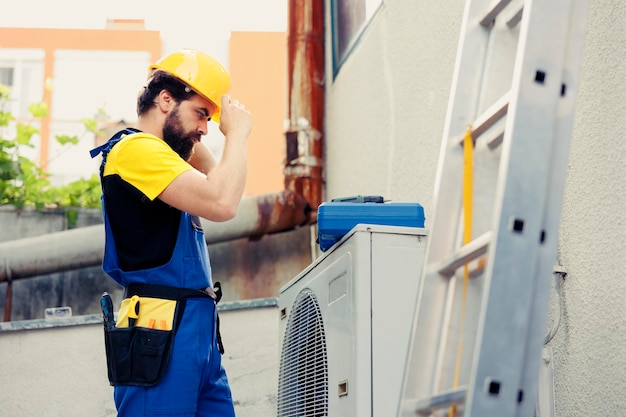
Image source
Safety should always come first. If there are issues like carbon monoxide poisoning, or you feel the unit has become a fire hazard, don't hesitate to replace it.
The poisonous gas could result from a cracked heat exchanger letting it inside your home. While you might be able to fix it, it's not worth it; carbon monoxide is fatal. A fire hazard is another risk you don't want to take; investing in a new AC is much more reasonable than putting your home at risk.
For minor safety issues like faulty wiring or stuck valves, a thorough repair by an expert can fix it cost-effectively.
4.Eco-Friendliness
ACs are a great way to manage temperatures during hot summers. But while they're helpful, they can also be a major energy guzzler, significantly increasing your electricity bills and negatively impacting the environment.
Switching to an eco-friendly unit is wise if you want to cut energy consumption or help care for the environment.
Older units might be running on refrigerants that are now considered environmentally harmful. Since this is not something you can fix with a repair, moving to a newer model with fewer environmental impacts is the best option. These ACs also use considerably less power, reducing energy bills while cutting your carbon footprint—a win-win.
5.Cost

Image source
Continually repairing your AC, and nothing seems to be improving? Getting a new unit might be a sound decision financially.
ACs need maintenance and repairs routinely, but if the repair cost is getting out of hand, it can ultimately cost more than installing a new one. The typical formula used to determine the repair cost is multiplying the cost by its age; if it's more than $5,000, replace it. For example, if its age is 10 years, and the repair cost is $623, that brings the total to $6,230, which is more than $5,000, the right thing is to get a new one.
6.Future Plans
If you plan to move out soon, repairing the AC instead of acquiring a new one might be better. But if you plan to stay longer, investing in a top-tier system is not just cost-effective, it also contributes to the comfort of your home. Installing future-ready new models could enhance your home's cooling system.
So, looking at your future needs could help you decide whether to repair or buy a new AC.
Conclusion
Deciding between fixing your AC or buying a new one depends on many factors—performance, breakdown frequency, eco-friendliness, safety, cost, and plans. Your choice must contribute to solving current problems, enhancing comfort, and investing in the future.
With this guide, homeowners can make informed decisions to ensure their homes remain cool throughout the summer while enjoying peace of mind. If you can't decide, it's advisable to seek advice from experts for long-lasting solutions.
Image source
The age and condition of an AC system impact its overall efficacy and performance.
If your AC is older than 10 years, there's a good chance that it no longer functions optimally and is not built for efficiency. EnergyStar recommends replacing it every 10-15 years. That's because by then, they will be run on older technologies, and you can't get the same level of performance with modern units.
However, it's just a life expectancy; some HVAC systems could still run smoothly after 20 years of use. So, you don't necessarily need to throw it away, especially if a minor fix could get it up and running.
If you're unsure, consult a local professional for the best solutions. Why a local? They understand your area and know the best remedy. For instance, if you are in Ocala, find a reputable HVAC Ocala specialist for customized solutions like adding external shedding or changing placement to enhance its performance before discarding it; their experience and insights will help you make the best choice.
- Breakdown Frequency
If an HVAC technician is on your dial list because you keep calling them to repair the unit due to loud noise, improper cooling, or any other issues, maybe it's time to replace it.
Frequent recurring issues could be signs of deeper underlying issues that might be unfixable, resulting in the woes. But, if the units only require occasional repairs and still run smoothly, replacing them immediately isn't necessary.
Age could be a factor here. Older units are also likely to break down, compromising reliability and comfort. To avoid dealing with frequent, annoying repairs, replacing it is the best option. New models are designed with useful features like air filtration systems that enhance indoor air quality, which means more comfort.
- Safety
Image source
Safety should always come first. If there are issues like carbon monoxide poisoning, or you feel the unit has become a fire hazard, don't hesitate to replace it.
The poisonous gas could result from a cracked heat exchanger letting it inside your home. While you might be able to fix it, it's not worth it; carbon monoxide is fatal. A fire hazard is another risk you don't want to take; investing in a new AC is much more reasonable than putting your home at risk.
For minor safety issues like faulty wiring or stuck valves, a thorough repair by an expert can fix it cost-effectively.
- Eco-Friendliness
ACs are a great way to manage temperatures during hot summers. But while they're helpful, they can also be a major energy guzzler, significantly increasing your electricity bills and negatively impacting the environment.
Switching to an eco-friendly unit is wise if you want to cut energy consumption or help care for the environment.
Older units might be running on refrigerants that are now considered environmentally harmful. Since this is not something you can fix with a repair, moving to a newer model with fewer environmental impacts is the best option. These ACs also use considerably less power, reducing energy bills while cutting your carbon footprint—a win-win.
- Cost
Image source
Continually repairing your AC, and nothing seems to be improving? Getting a new unit might be a sound decision financially.
ACs need maintenance and repairs routinely, but if the repair cost is getting out of hand, it can ultimately cost more than installing a new one. The typical formula used to determine the repair cost is multiplying the cost by its age; if it's more than $5,000, replace it. For example, if its age is 10 years, and the repair cost is $623, that brings the total to $6,230, which is more than $5,000, the right thing is to get a new one.
- Future Plans
If you plan to move out soon, repairing the AC instead of acquiring a new one might be better. But if you plan to stay longer, investing in a top-tier system is not just cost-effective, it also contributes to the comfort of your home. Installing future-ready new models could enhance your home's cooling system.
So, looking at your future needs could help you decide whether to repair or buy a new AC.
Conclusion
Deciding between fixing your AC or buying a new one depends on many factors—performance, breakdown frequency, eco-friendliness, safety, cost, and plans. Your choice must contribute to solving current problems, enhancing comfort, and investing in the future.
With this guide, homeowners can make informed decisions to ensure their homes remain cool throughout the summer while enjoying peace of mind. If you can't decide, it's advisable to seek advice from experts for long-lasting solutions.